CWS-CARES Public Library

The CWS-CARES Public Library is a searchable repository of project information. The articles published here may also be located in the CARES Explorer Newsletters. If you have any questions, please contact CWDS Communications.

Or browse articles by category:

Product Features

Read about CWS-CARES functionality and new features. Expand your understanding of the new system, how it will work, and what the impact will be for end users.


Service Areas and Milestones

Learn more about Service Areas (the core functions and capabilities of CWS-CARES related to child welfare activities and practices) and Milestones (significant stages in development).


Teams and Roles

Meet the people behind CWS-CARES and learn more about how different teams work together to shape the final product.​​


Recent Articles

Forms and Reports: Preparing for Go-Live and Beyond

​​​​​The CWS-CARES project is working in partnership with Counties to develop forms and reports as we approach Go-Live. Our current priority is to address County questions regarding project responsibilities for forms and reports development. A few of these questions are included below, although they do not represent an exhaustive list of questions received.
Which Forms and Reports will be developed by the project?
Check the CARES Forms Tracker on the CARES Forms Workgroup Microsoft Teams Channel for the current list of state forms slated for CARES Version 1 (V1) development by the project. Please note, additional state forms not currently listed on the CARES Forms Tracker will be created by the project after CARES V1 Go- Live. The project, in partnership with CDSS, will identify additional forms for project development, and updates will be shared as this work progresses.
Will state forms built by the project be up to date?
The project will use the most current guidance available from CDSS and the Judicial Council to build each form by CWS-CARES Go-Live. If a state form is updated after it has been built, those changes will be queued and applied on an ongoing basis post Go-Live.

Originally published in the CWS-CARES Explorer.

By the Numbers: Extended User Scenario Testing (EUST) 3

EUST is a structured, time bound activity that is intended to allow users from various counties an opportunity to provide user experience feedback on CWS-CARES. The EUST period includes end-to-end testing of scenarios in CWSCARES.

The CWS-CARES project has previously conducted two rounds of EUST and is currently in the process of facilitating the third. EUST 3 includes the following phases:
  • CWS-CARES Administrative Console, which concluded on January 30, 2026
  • EUST 3 General, which began on February 2 and concludes on April 3, 2026
  • EUST 3R (Reporting), beginning on February 23 and concluding on April 3, 2026.
     
The scope of EUST 3 General covers a wide range of core process areas, including Screening/Intake, Ongoing Casework, Placement, Courts, Eligibility, Financial Management, Structured Contact Notes, Adoption and After Care, and Resource Management/Resource Family Approval. It also includes testing for key assessments, and interfaces.
Participation and Feedback Statistics as of February 20, 2026
27 users provided feedback, across 17 counties in CWS-CARES Administrative Console testing, which resulted in 118 feedback items collected. As of Friday, February 20, 2026, the CWS-CARES project has received 569 feedback items from 100 users participating in EUST 3 General, all of which are being reviewed, prioritized, and incorporated into ongoing project planning. Feedback collection for EUST 3 General and Reporting will remain open through April 3, 2026, and a summary of results will be shared with EUST 3 participants in April 2026.

We greatly appreciate the time, effort, and thoughtful input provided by everyone participating in EUST 3. Your continued engagement plays a vital role in strengthening CWS-CARES, and we thank you for your ongoing partnership!

Originally published in the CWS-CARES Explorer.
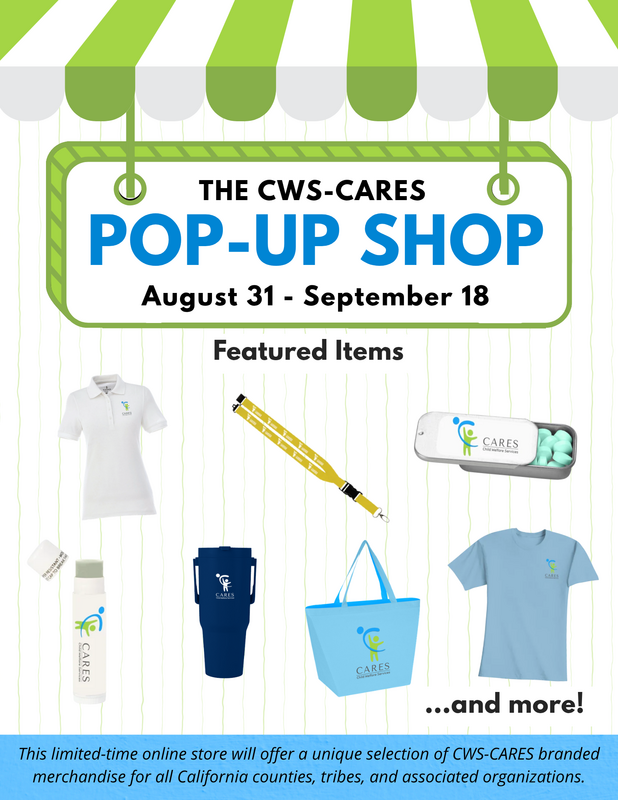
On the Path to Go-Live: CWS-CARES Readiness Update

In preparation for CWS-CARES Go-Live in October 2026, we are introducing a new key readiness activity: the Production Simulation (Prod Sim) environment. Pending federal approval, counties will gain access to Prod Sim in May 2026, which will allow users to practice and test system functionality in a digital environment mirroring CWS-CARES Version 1 (CARES V1).
Key Benefits of Production Simulation:​​
  • ​Open to all 58 Counties, Tribes with Title IV-E Agreements, and State Partners starting May 2026​

  • Populated with converted data from CWS/CMS, CARES-Live, and RFA Greenfield​

  • Includes full interfaces, analytics, and "real-world" referral/case management


The CWS-CARES Service Desk will launch around the same time to manage incidents and escalations, provide business continuity, and offer general support. The project will also hold trainings before and during Prod Sim to support staff readiness as we move toward CWS-CARES Go-Live.

To further strengthen readiness efforts, CWS-CARES County Advisory Committees (CACs) focused on Prod Sim, Service Desk, and Training were introduced in February 2026 to provide a dedicated forum for collaboration. ​CACs, referred to as "workgroups" in previous communications, are expected to continue through Go-Live alongside existing project workgroups. The purpose of the CACs is to enhance overall county readiness, provide feedback for operational support, and promote collaboration.

Thank you to all counties who have volunteered to participate in the County Advisory Committees! Your engagement, insights, and partnership directly shape a smoother, more successful transition to CWS-CARES.

Originally published in the CWS-CARES Explorer.

Process Information Sessions: What's Been Covered and What's Ahead

Throughout 2025, the CWS-CARES Project has held 32 Process Information Sessions to learn about new processes in CWS-CARES and how they might impact organizations. Following these sessions, each organization has time to further discuss the potential impacts and ask questions.

Additional Process Information Sessions will be held early in 2026, and the follow-up sessions will continue to be scheduled into the new year.

Visit the Implementation Portal to learn more about the sessions or download the recordings and materials from these sessions: CWS-CARES Process Information Sessions.


Originally published in the CWS-CARES Explorer.

Shaping CWS-CARES through Testing

The CWS-CARES Project is in an important phase of hands-on testing. Recent usability testing provided insight into system design, and the next major milestone, Extended User Scenario Testing (EUST 3), is coming in early 2026. Together, these efforts help prepare CWS-CARES for Version 1 (V1) Go-Live.
A Look Back at Usability Testing ​

From October – December, the project conducted two Usability Testing Periods with a subset of counties that had previously participated in EUST 2.  These smaller sessions provided an early look at how new CWS-CARES functionality feels to real users and supported logistics and scenario planning for EUST 3. ​

During these periods, county testers worked through targeted tasks in the CWS-CARES Staging Environment and shared feedback on navigation, workflow clarity, and overall user experience. At this time, feedback resulting from usability testing is unlikely to be addressed during EUST 3 and will instead inform overall CWS-CARES development over time. The primary value of these periods was feedback on scenario steps, testing processes, and Structured Decision Making (SDM) assessments, and user flows, which is informing refinement to the EUST 3 testing approach, scenario design and training preparation. ​

Preparing for Extended User Scenario Testing (EUST) 3​

EUST 3 is scheduled for February 2 through April 3, 2026, with Admin Console Testing from January 20-30. During EUST 3, participants will complete real-world, end-to-end scenarios that span multiple CWS-CARES service areas to assess system readiness ahead of CWS-CARES V1 Go-Live. 

EUST 3 Timeline at a Glance

Activity ​

Training Dates ​

Testing Dates ​

Admin Console  ​

January 12 – 16, 2026 ​

January 20 – 30, 2026 ​

EUST 3 ​

January 13 – February 20, 2026 ​

February 2 – April 3, 2026 ​

EUST 3R (Reporting) ​

February 17 – 20, 2026 ​

February 23 – April 3, 2026 ​


An EUST 3 Kickoff Session was held on January 6, 2026 to review expectations, key dates, and where participants can find support. A full kickoff communication will also be distributed in early January with additional details to guide the testing period. ​

Thank you to all participants for your continued engagement and contributions. Your involvement is essential to shaping CWS-CARES as we move toward V1 Go-Live. For questions, please contact the CWS-CARES EUST Mailbox.

Originally published in the CWS-CARES Explorer.

CWS/CMS Data Conversion Update & Timeline

Data Conversion is the process of bringing existing case information from CWS/CMS into CWS-CARES so counties can continue their work seamlessly when the new system goes live in October 2026. This work is done in close partnership with counties and other organizations to ensure information is carried over accurately and consistently.​

To support this effort, the Project is completing Data Conversion through six cycles, along with two full practice runs (mock cycles), to test and confirm that information moves correctly into CWS-CARES. This phased approach helps identify issues early and strengthens readiness for all counties.​

As of December 2025, Data Conversion Cycles 1–5 are complete, and Cycle 6 is currently underway. A small group of county representatives volunteered to review converted information and share feedback, helping ensure the system is on track for Go-Live. Thank you to the counties and participants supporting this work—your involvement helps strengthen CWS-CARES for everyone.​


Originally published in the CWS-CARES Explorer.

Staying Connected Statewide with P-CIS & CWS-CARES

The California Department of Social Services (CDSS) has partnered with Opeeka to implement the Person-Centered Intelligence Solution (P-CIS) into CWS-CARES. P-CIS improves care coordination across multiple agencies to ensure that children and youth receive the services they need. 
What is P-CIS? ​

P-CIS is a Software as a Service (SaaS) platform designed to streamline workflow, integrate with multiple systems, and provide real-time access to assessments, analytics, and outcomes tracking. P-CIS allows different systems to work together, enabling secure and efficient data sharing, and eliminating duplicate data entry. 

Signing on to P-CIS with SSO​

Single Sign-On (SSO) is a convenient way to access multiple platforms using just one username and password. Once you sign in to CWS-CARES, SSO allows you to seamlessly access the P-CIS platform without needing to log in again. ​

Actionable Insights with Analytics ​
  • Trajectory Graph - Visualize changes in needs and strengths over time, with options to toggle or combine categories. ​
  • Story Map - Summarize needs and strengths with supporting context, ideal for Child and Family Team discussions.  ​
  • Item Detail - Review specific item scores and notes over time for a deeper understanding.  ​
  • Family Reports - Provide families with a clear summary of recent CANS scores and progress, custom built with CDSS and DHCS stakeholder input. 
Sharing CANS for Enhanced Collaboration ​

The P-CIS/CWS-CARES interface enables sharing of Child and Adolescent Needs and Strengths (CANS) assessments among providers. Benefits of data sharing between agencies include: ​

  • Integrated History: Historical CANS from CWS-CARES and Behavioral Health systems are consolidated within P-CIS.   ​
  • Real-Time Sharing: Behavioral Health agencies can share CANS with CDSS in P-CIS, enhancing coordination.   ​
  • Statewide Alignment: A unified approach ensures consistency across counties and partners. ​
CANS Assessment Features: ​
  • Seamless integration of CWS-CARES, P-CIS, and County Behavioral Health agency platforms. ​
  • Centralized data collection to streamline workflow, automate notifications and ratings. ​
  • Longitudinal analysis to track consolidated CANS data to identify trends and inform updates. ​
  • Workflow automation to improve documentation efficiency and compliance. ​
  • Customizable security and consent management to enable controlled data sharing. ​
  • Caregiver Tracking: Monitor caregivers’ progress over time to improve outcomes for children and families. 
Outcomes for Communities Served  ​

By integrating data across care organizations, P-CIS improves outcomes by: ​

  • Greater care coordination among agencies and service providers. ​
  • Faster and more informed decision-making based on real-time data. ​
  • Enhanced transparency and accountability in case management. ​
  • Better long-term outcomes for children and youth through data-driven interventions. 

Originally published in the CWS-CARES Explorer.

Learn More about CWS-CARES: Resources Introduced in 2025​

CWS-CARES Infographics, Flyers, and Slogans Webpage 
In December 2025, the Project launched a new webpage to centralize CWS-CARES infographics and fliers. You can now view, share, and download a variety of Project one-pagers. View the new page on the CWDS Website to see what resources are available: CWS-CARES Infographics, Flyers and Slogans webpage.
Product Demonstrations Webpage
In November 2025, we launched a new webpage for viewing Core Constituent Demonstrations. Stakeholders with an eligible organization email address can watch recorded product demonstrations to learn more about CWS-CARES functionality. Log in with your organization email address to view the CWS-CARES Product Demonstrations.
CWS-CARES Weekly Digest 
Beginning September 2025, the Project shared weekly updates through our new email series: the CWS-CARES Weekly Digest. To streamline communications, every Monday, subscribers, SPOCS, Implementation Coordinators, and County Leadership receive an email with non-urgent CWS-CARES updates. Subscribe to the Weekly Digest!
Progress and Engagement Summary 
Seven Progress and Engagement Summaries were posted to the CWDS website in 2025. The Progress and Engagement Summary is a monthly progress report for all stakeholders. Continue to stay informed and follow our progress in 2026: CWS-CARES Progress and Engagement Summary
CWS-CARES Public Library 
The Public Library went live on the CWDS website in spring 2025. It serves as a searchable repository of Project information, primarily sourced from previously published CARES Explorer issues. Check out all the articles on the CWS-CARES Public Library!
Portals and Hubs 
The CWS-CARES Project added two new resources to the CWDS Portals page: the External Systems Portal (September 2025) and the FCED Hub (October 2025). The External Systems Portal features an updated version of the CWS-CARES Scope Summary, meeting recordings and Q&A documents from the External Systems Monthly Meeting series, and more. Stakeholders can find up-to-date resources, Governance Committee Meeting materials, and demonstrations related to Foster Care Eligibility and Determination (FCED) on the FCED Hub.  
Project Newsletters 
Six CARES Compass issues and four CARES Explorer issues were posted to the CWDS website in 2025. In response to feedback that counties and organizations feel overwhelmed with the number of communications received, we plan to retire the Compass starting January 2026. Communications will continue through the CARES Explorer and CWS-CARES Weekly Digest. Subscribe to the Weekly Digest to receive every issue of the CARES Explorer.
CWS-CARES Video Series
Two CARES 101 videos were published in 2025. View all the CWS-CARES videos on the CWDS Website by navigating to the User Resources Webpage and scrolling to bottom of the “Resources for All Stakeholder” section. 

Watch a 7-minute demonstration of the CWDS website to view more resources available to our stakeholders.The resources demonstration was created for the CWS-CARES Stakeholder Briefing #5 on January 25, 2026 and can be found in the corresponding folder on the Stakeholder Webinar Materials page: Stakeholder Webinar Materials | CWDS.

Originally published in the CWS-CARES Explorer.

Partnership in Action: Information and Document Sharing between CWS-CARES and CalSAWS​

When a child is removed from their home and placed into Foster Care, CWS-CARES will create an Eligibility Record and initiate a case link to CalSAWS through the Foster Care Eligibility Determination (FCED) interface. The FCED interface allows information to be shared bi-directionally between CWS-CARES and CalSAWS to support the provision of Foster Care and Medi-Cal benefits. ​

CWS-CARES will provide the CalSAWS worker with information regarding the child’s return home or their transition to permanency through legal guardianship, adoption, or Extended Foster Care. This information will assist CalSAWS workers to continue to provide benefits to the child through programs such as Non-Related Legal Guardianship (AFDC-FC), Kinship Guardianship Assistance Program (Kin-GAP), or Extended Foster Care. ​

What information can be shared between CWS-CARES and CalSAWS? ​

CWS-CARES will provide information through the FCED interface to CalSAWS regarding placement changes, rate changes, Intercounty Transfers (ICTs) and more. CWS-CARES and CalSAWS workers can upload documents to be viewed and/or downloaded by the worker in the other system, such as birth certificates and court orders. In addition, CWS-CARES and CalSAWS workers will be able to use the FCED interface for limited messaging called Request for Information (RFI). This can be used to request information or documents from the worker in the other system, to advise that documents have been uploaded and are ready to view, or to share information. ​

Originally published in the CWS-CARES Explorer.

Hands-On with CWS-CARES: Upcoming Testing Periods ​

The CWS-CARES Project has several important user testing activities scheduled over the coming months. These testing periods allow organizations to engage directly with the system, provide feedback on its design, and help ensure readiness for CWS-CARES Version 1 (V1) Go-Live. ​

Usability Testing: October – December 2025 ​

The Project will conduct two Usability Testing Periods prior to Extended User Scenario Testing (EUST) 3. These sessions invite a limited group of Core Constituent counties who were engaged in EUST 2 and confirmed participants in EUST 3 to complete defined tasks in specific areas of CWS-CARES. The goal is to gather early input on functionality, evaluate usability, and address issues before moving into broader end-to-end testing. ​

EUST 3: February – April 2026 ​

Following the usability testing rounds, organizations are invited to participate in EUST 3, scheduled for February 2 – April 3, 2026. ​

EUST 3 takes a holistic approach, asking participants to complete real-world, end-to-end scenarios that span multiple areas of the system—from Screening and Intake to Forms. This broader view builds on the focused usability testing and provides a comprehensive assessment of system readiness ahead of CWS-CARES V1 Go-Live. ​

Support for Participants ​

Counties participating in testing will receive support through kickoff sessions, optional office hours, and connectivity guidance to ensure access to the CWS-CARES staging environment. Feedback will be collected directly from testers as they complete their assigned tasks. Together, the Usability Testing Periods and EUST 3 create a structured path toward CWS-CARES V1, ensuring the system is ready for successful statewide use. For questions, please contact the CWS-CARES EUST Mailbox. ​

Testing Timeline ​

Usability Testing Period 1​: October 27 - November 7, 2025​
Scope: Screening/Intake, Referral/Placement, Risk/Safety Assessment, Person Profile, Plan of Safe Care, 90-Day Transition Plan ​

Usability Testing Period 2​: December 8 - December 19, 2025​
Scope: Adoption & After Care & Re-Entry (Finish a Case), Forms ​

EUST 3​: February 2 - April 3, 2026​
Scope: All service areas in Usability Testing Periods 1 & 2, validation of previously testing functionalities within CWS-CARES, State and Federal reporting, and CWS-CARES Administration Console​

Originally published in the CWS-CARES Explorer.